Understanding Health Information: Embracing curiousity
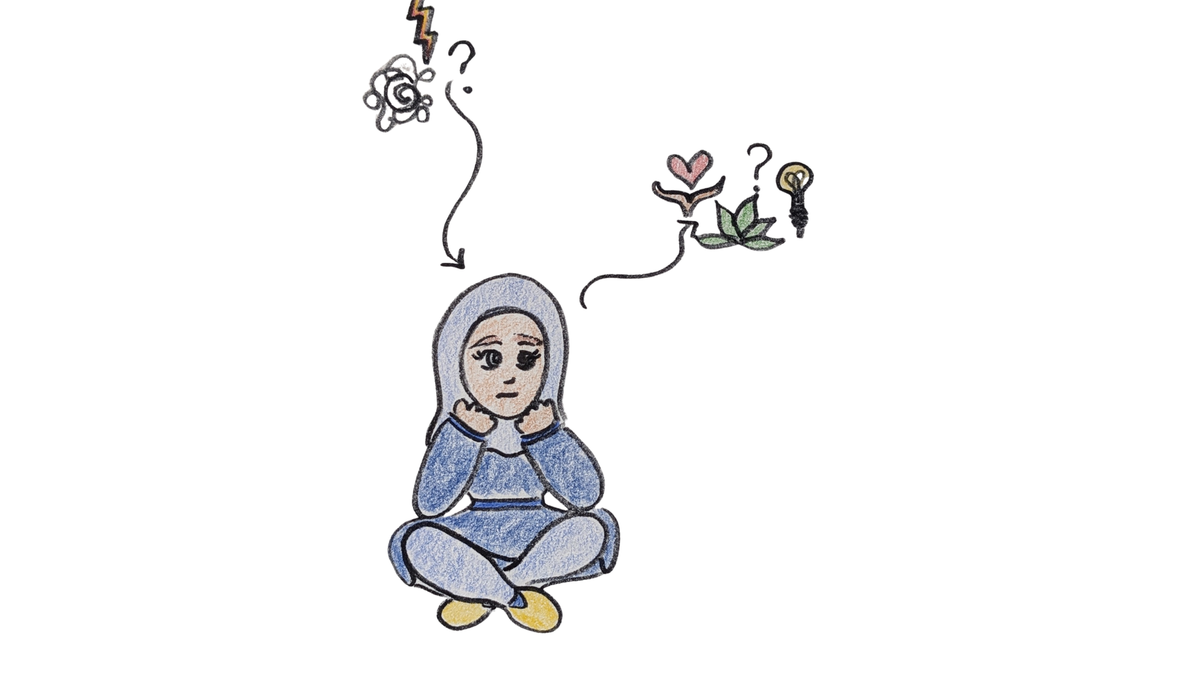
I had a valuable conversation one day about feeling shame. A therapist told me it was not shameful to cry and I agreed. But, I said, this feeling still shows up when I feel tears coming. They calmly looked at me and suggested it was an opportunity to re-inspect my values. Their explanation: when we feel shame arise for something that we don’t believe is wrong, it signals that we may be ascribing to external values instead of our own beliefs.
This invitation to get curious about my values is akin to my journey with understanding health information.
Fit-for-purpose information
Growing up, my understanding of health information was very binary. Information was a way to distinguish good behaviours, foods, and physical symptoms from bad ones. It wasn’t until I was an adult that I truly began to inspect and challenge this view. I had been monitoring myself based largely on external sources of validation for years. Health was something to achieve - information was fit-for-purpose.
We are constantly provided comparisons and portrayals of ideal health. Often these ideals are sold as attainable (with time, effort, and money); something we are responsible for attaining. Rarely do I hear advice to get curious about my health without trying to change it.
So how did I go from aquiring health to getting curious?
I learned one of life’s truths...health does change.
Everything changes. Without us doing anything, by doing some things, and even when we do everything. Health is not something we control. Some changes are slow or overtime and others are larger shifts or events that leave us feeling groundless and disconnected with life as we know it.
Testing my views through observation
As I began to take notice of more diversity, I increasingly noticed inconsistencies in my binary, specific, and close-minded understanding of health.
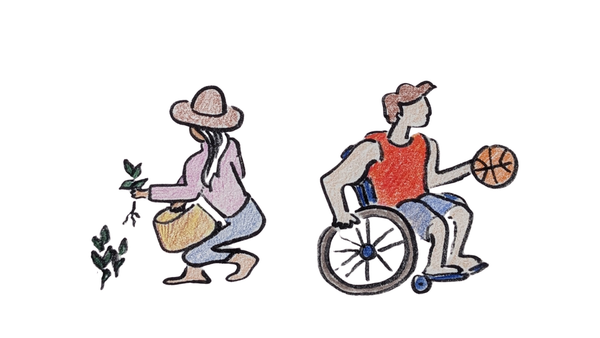
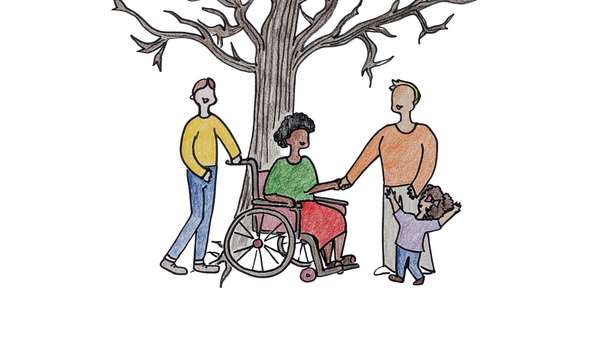
For example, I noticed people that were thin, muscular, able-bodied, wealthy, and energetic were not all modelling “good” choices and even those that appeared to "be good" still experienced health changes. I met energetic, muscular people with dis/abled bodies and witnessed people making "bad" choices who radiated confidence and wisdom - a brilliance only seen in those with great mental and spiritual wellness.
Further, I noticed how my own body experienced changes that could not simply be explained by guidelines of the good and bad categories or “calories in, calories out” type of mindset that I had believed. All of these observations challenged my understanding of health. I began to understand the guilt I felt reaching for cream instead of milk for my coffee or of walking instead of running as a remnant of an outdated values system that did not ring true. It was freeing, but also a little destablizing to reintepret health information through a bigger lens.
Widening the scope of health information
I began to appreciate and accept that health does not just “look” a certain way, it also is something that can be felt and experienced. My understanding of health has expanded beyond physical to include mental, emotional, and spiritual wellbeing. A teaching I learned from Indigenous medicine wheel teachings – like this one. Finding balance in these areas involves a different approach and includes compassion, humility, consistency, alignment, and healing.
We may only think about health information when there is a problem to solve. Maybe we want to prevent or mitigate health problems. Health crises can be overwhelming and life-altering, but health information could be something we learn without necessarily changing anything.
Health is something we can feel and observe about ourselves and others. I used to see it as an ideal state that I was trying to achieve. Over time, I have shifted my view to see it as something in-flux. Information can teach us to understand and balance active currents that exist in ourselves and others.
Compassionate understanding
Living our life with compassion for my own body does not always feel natural. Yet, opportunities - including this present moment - arise to explore our health without judgement. We can choose to see and feel things about ourselves that we have long avoided.
Information helps us understand our patterns and learn strategies to be more present, feel balanced, heal ourselves, support our environment, and give back to what feeds us.
Understanding health with science
Science measures and categorizes observations in a very structured way to describe and understand life. It is a very useful and powerful tool for exploring, building, and changing our world. It is, however, only one way to view how things work. I generally focus on using these scientific sources of information in this blog as it often provides useful insights within my lifestyle and is what I have been trained to use in my education.
Health beyond scientific study
Health in the context of medical science is very focused on physical function and mental stability, but many sources point to a broader understanding of health. One that encompasses metaphysical and relational wellbeing.
Despite my focus on science, I am also aware that the development of scientific methods was often done with the goal of obtaining knowledge, irrespective of how that knowledge was found. Numerous examples of harmful research practices and experiments come up with a simple google. Despite the introduction of ethical requirements for research, that history makes me wary of relying on it as the only source of truth. Seeking information that has been generated and maintained with intentional respect for all beings is a worthwhile pursuit. I do know it exists, but unfortunately I don't have good sources to share.
My advice? Stay curious about alternative perspectives, especially those that consider wellness, reciprocity, and renewal.
A healthy dose of curiousity
Health information has a wide spectrum to offer. Getting curious about our beliefs can help understand what we seek and how we take action. If the information we find brings shame or guilt, it gives us an opportunity to inspect our beliefs. Recognizing feelings can be an avenue into your current state and is an opportunity to get curious about what information we believe improves our health.
Perhaps ask youself: Is there any chance I am viewing myself with external judgement? Does a quiet(er) voice say something kind? Is health information a guidebook or a set of rules?
Being open-minded with a discerning heart is a way to wisely grow. I encourage you to reflect on what has shaped your context and your own understanding of health. Knowing this about yourself enables exploration with more clarity or it offers the chance to challenge views for meaningful discovery and good health.
Disclaimer and reflexive statements
How we receive information is personal and highly dependent on each situation. I have lived the majority of my life in a young, able, white body. Information about health was usually tailored to my perspective and worldview. This helped reassure me about my health behaviours and built confidence in my understanding of health.
I believe information that includes more diversity of perspectives and situations strengthens confidence through the understanding that health can be legitimate and supported through a wider set of values and practices. Allowing each individual, family, and community to benefit from health information and shape a lifestyle that is personally aligned.
I write this personal disclosure to acknowledge my privilege and do not pretend to know an alternative lived experience. However, I embrace a broader vision of health and am committed to deconstructing the harmful social structures that maintain unequal power of perspectives.
Related posts
Sourcing good, contextualized information that suits your needs is discussed in another post: 5 Easy Tips for Finding Health Information.
Subscribe so you don’t miss the next post about using health information.